Understanding Contraception for a Better Future
Family planning is every couple’s responsibility. Let’s explore various methods from a scientific perspective.
The Importance of Family Planning
To build a healthy, happy, and harmonious family, every couple should plan the number of children and the spacing between births in advance, ensuring each child receives full love and care. Effective family planning and birth control rely on reliable contraceptive methods. These methods alter the reproductive system’s state and function to prevent unintended pregnancies. Therefore, individuals practicing contraception should have a clear understanding of male and female physiology, the conception process, causes, principles of various methods, effectiveness rates, and proper usage.
Conception Principles
Every healthy woman of reproductive age, from menarche in puberty to menopause, releases one mature egg from the ovary each month in a process called ovulation. During intercourse, the man ejaculates semen containing sperm, some of which travel through the vagina and cervix into the uterus, and some into the fallopian tubes. Fertilization occurs when sperm and egg meet and combine in the fallopian tube. The fertilized egg divides continuously and moves gradually from the fallopian tube to the uterine cavity. About eight days later, it reaches the uterus and implants in the endometrium, developing into a fetus.
Contraception Principles
General contraception principles are:
- Suppress ovarian ovulation.
- Prevent sperm from meeting the egg.
- Kill sperm or reduce sperm motility.
Effectiveness of Contraceptive Methods
The effectiveness of contraceptive methods varies, partly due to the method’s inherent principles and partly depending on consistent and correct use by the user.
| Contraceptive Method | Pregnancy Rate per 100 Women in First Year (%) |
|---|
| Male Sterilization | 0.1-0.15 |
| Female Sterilization | 0.5 |
| Oral Contraceptive Pill | 0.3-9 |
| Contraceptive Injection | 0.2-6 |
| IUD (Copper) | 0.6-0.8 |
| IUD (Hormonal) | 0.2 |
| Male Condom | 2-18 |
| Female Condom | 5-21 |
| Spermicides | 18-28 |
| Rhythm Method | 4-24 |
| No Method | 85 |
| Source: WHO Medical Eligibility for Contraceptive Use 2015 | |
Oral Contraceptive Pills
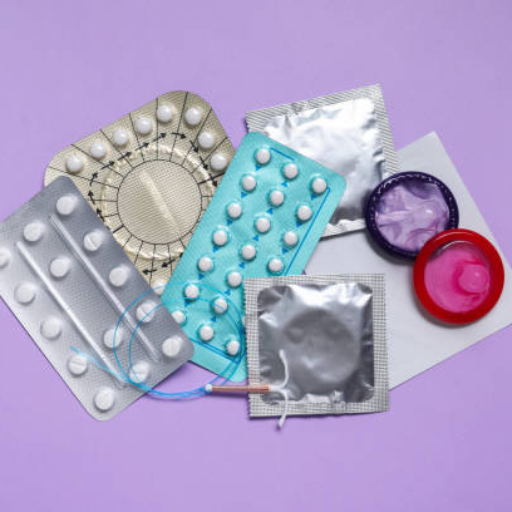
Pills use synthetic hormones to suppress ovulation and thicken cervical mucus, preventing sperm entry into the uterus. Available in progestin-only and combined types, in 21, 24, or 28-pill packs. First-time users start within the first five days of menstruation, one pill daily. Progestin-Only Pills: Contain progesterone, suitable for breastfeeding women. Side effects include nausea, weight gain, dizziness. Combined Pills: Contain estrogen and progesterone. Similar side effects; breastfeeding women start after six weeks postpartum. Note: Women over 35 who smoke should avoid combined pills. Pills do not cause infertility.
Contraceptive Injections
Injections deliver synthetic hormones intramuscularly to suppress ovulation and thicken mucus. Available in progestin-only and combined types. First injection within seven days of menstruation. Progestin-Only Injection: Every three months. May reduce bone density; supplement calcium. Side effects include weight gain, irregular periods. Combined Injection: Monthly. Side effects include irregular bleeding, nausea. Note: Fertility returns after discontinuation, no infertility caused.
Intrauterine Device (IUD)
An IUD is a small device placed in the uterus for contraception. Typically T-shaped with copper or hormones, lasting 5-10 years. Alters uterine environment, affects sperm motility, prevents implantation. Suitable for long-term use but not for those with infections or multiple partners. Insertion: By trained professionals, ideally first five days of cycle. May cause mild discomfort, increased bleeding. Note: Regular checks post-insertion; seek medical help for abnormalities.
Male Condoms
A latex sheath worn over the erect penis to block sperm entry. Reduces STI risk, minimal side effects. Usage Steps:
- Check expiration and packaging.
- Tear carefully.
- Wear before contact.
- Squeeze tip to remove air.
- Unroll fully.
- Withdraw promptly after ejaculation.
- Use new one each time.
Female Condoms
Made of polyurethane, lines the vagina to collect semen. Reduces STI risk. Usage Steps:
- Check expiration.
- Choose comfortable position.
- Squeeze inner ring and insert.
- Push to pubic bone.
- Twist outer ring and remove after intercourse.
- Use new one each time.
Spermicides
Include foams, films, suppositories. Contain sperm-killing agents placed in vagina. Lower effectiveness but simple. Rare allergies. Usage: Foam wetted and inserted; films/suppositories 15 minutes before intercourse.
Male Sterilization (Vasectomy)
Permanent method cutting vas deferens. Not immediate; confirm with semen tests. For those done with children. Minor complications like swelling, pain.
Female Sterilization (Tubal Ligation)
Permanent, blocks fallopian tubes. Immediate effect. For those done with children. Possible complications like bleeding, inflammation.
Rhythm Method
Natural planning avoids intercourse during ovulation. Uses temperature, calendar, mucus tracking. Not for irregular cycles. No side effects but requires cooperation.
Emergency Contraception
For unprotected sex scenarios. Copper IUD: Inserted within 5 days, 0.09% pregnancy rate. Emergency Pill: Within 72-120 hours, 1-3% rate. Side effects like headache, nausea. Not for regular use.
Conclusion: Consult a doctor before choosing. A healthy family starts with planning!